
 It is human nature to want to better ourselves. As a school, this is our main purpose…to give students academic tools and a nurturing environment that makes them better students and prepares them for the next step in their educational and life journeys.
Unfortunately, society has replaced this old-fashioned thinking with one of entitlement. Putting in the time and doing the work has been supplanted with shortcuts (usually accompanied by a monetary exchange). This story from the CBC is an excellent example.
Erwin Sniedzins, a Toronto entrepreneur and would-be politician, spent $8,100 to get a Master of Education degree in Technical Education from King’s Lake University. Sniedzins also noted that he did not want to spend $30,000 on a real degree that required him to actually do any work to earn the degree. He was shocked to find out that the “no studying, no exams, and no academic work” policy of the school was too good to be true and he had been scammed.
Sniedzins repeatedly told CBC Toronto that he never suspected a degree based on life experience that required no academic work, studying or exams could be fake as it was in line with his approach to education. “I thought that was great. They should actually have universities that do that,” he said.
Now if it were me, I would rather consider the $8,100 as unrecoverable rather than have everyone in the GTA know what an idiot I was to fall for the scam. Even worse would be to let my family, friends, and colleagues know that I was willing to buy accreditation rather than earn it!
This is not a phenomenon with adults or with post-secondary education as we see this kind of thinking even at the high school level. There are schools who offer course credits with the same promises that Mr. Sniedzins cherished; in exchange for low effort and a fee, you can get a high mark in a course that you need for university acceptance. The long-term problem comes when the student gets to post-secondary education and her/his artificial marks do not help them understand the concepts being taught. Our students, who have put in the time and effort, quickly see the difference between where they rank academically (regardless of their entrance average).
Whether it is a kindergarten student who reads their first picture book or the Grade 12 student who finally “gets” how to find an indefinite integral, it is our mandate to give students the skills to work independently and to feel that they have “earned” these skills. After all, would you rather give your child the marks to get into post-secondary studies or the skills needed to be successful and finish their degree?
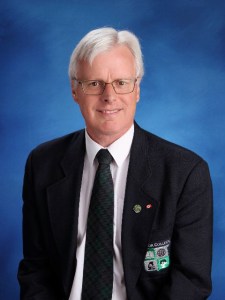
Chris Starkey
Administrative Principal
Mentor College/TEAM School
 June is a time of both endings and beginnings.
 This week, we sit down with Mentor’s High School principal Mr. Whyte to talk about the AP (Advanced Placement) programme:
 I don’t remember feeling as much stress in a school environment than when I went to write my first university examination. I had never written an evaluation in anything bigger than a classroom and there I was with over 1000 students in the gym in long rows of desks with a student card, two pens, and a queasy stomach! This is one of the reasons why we give our Mentor high school students the “experience” of final examinations in the gym every June and why our students will have up to 9 years of experience in the examination process before they start post-secondary studies.
 I am trying to decide if it is my advancing years or if it is society in general but I am getting less tolerant when people either do not do what they have promised or change their minds about something that was once important.
 The Mentor/TEAM Blog